Searching for grounding techniques for anxiety? I’ve done the same. And I know what it’s like to fall down the mental health rabbit hole and be left with a seemingly never-ending list of answers to, “Why do panic attacks happen in the first place?”
It can feel overwhelming, sifting through the types of therapists and searching for the tools that can be a natural anxiety relief. And it’s something that far too many people deal with on a daily basis.
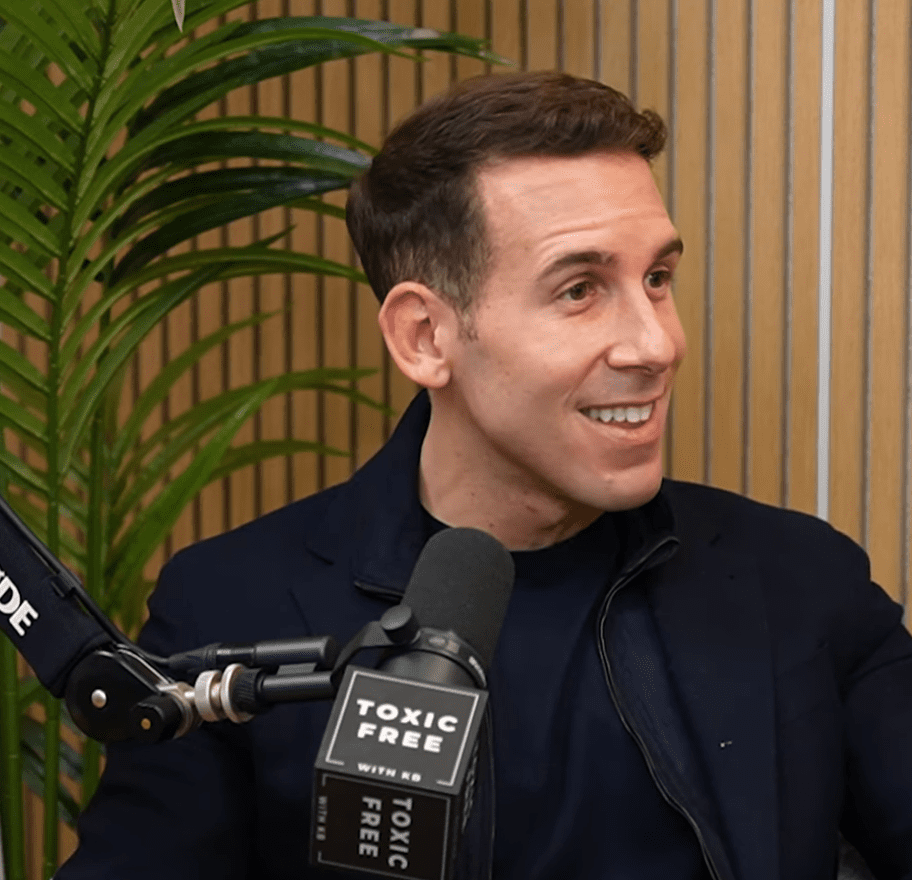
That’s why I knew I needed to bring in an expert to shed light on nervous system dysregulation and how to manage panic attacks. Who better than the incredible Dr. Nicole Cain?
Meet Dr. Nicole Cain, A Leading Expert in Clinical Psychology & Holistic Medicine for Anxiety and Panic
She’s a licensed naturopathic doctor, clinical psychologist, and author of Panic Proof: The New Holistic Solutions To End Your Anxiety Forever!, known for helping others heal their anxiety through trauma-informed holistic medicine.
Her approach, the Root-Cause Anxiety Framework, focuses on identifying the biological and psychological triggers—such as gut health, hormones, trauma, or nutrient deficiencies—driving anxiety rather than just treating the symptoms.
So take a breath, pour up some tea, and join me in a very important conversation around:
- Grounding Techniques for Anxiety & Panic
- How Anxiety Isn’t All Bad
- Why Panic Attacks Feel SO Physical
- Anxiety Triggers & Signs of Nervous System Dysregulation
Why Anxiety Symptoms Aren’t Always a Bad Thing
One of the most surprising parts of my conversation with Dr. Nicole Cain was hearing her say that anxiety itself isn’t necessarily the problem. In fact, she believes many of us have been taught to view anxiety completely backwards.
“Anxiety and panic are your body’s attempts to tell you what is wrong and how to heal it.”
Dr. Cain wants us to see our symptoms as information. Our anxiety as data.
The problem is that most of us have been conditioned to immediately suppress anxiety without ever getting curious about what the body may be trying to communicate.
- Is it chronic stress?
- A nervous system that’s been stuck in survival mode for years?
- An unresolved emotional wound?
- A gut issue that’s contributing to inflammation?
Because when we understand what the body is trying to tell us, we can finally begin addressing the root cause instead of just managing symptoms.
But our anxieties can escalate quickly, especially when unmanaged, leading into the very real, very felt experiences of panic attacks.
Why Panic Attacks Happen & Feel So Physical
Also, if you struggle with anxiety or panic, you might know there’s a difference in feeling, but not sure how one turns into the other.
Dr. Cain uses a stoplight analogy to describe the process of anxiety → panic.
- Green Light: The nervous system feels safe and regulated.
- Yellow Light: The early warning signs that something is beginning to feel unsafe, commonly known as anxiety.
- Red Light: is panic.
The challenge is that many people let the yellow stage go unchecked. Instead, they power through symptoms like:
- chest tightness
- stomach issues
- racing thoughts
- throat tension
- digestive changes
- dizziness
- feeling disconnected from themselves
until the nervous system eventually reaches a breaking point.
This is why panic attacks can feel so terrifying. They’re emotional AND physical experiences. Many people describe panic attack symptoms as feeling similar to a heart attack because the body’s stress response becomes fully activated.
And according to Dr. Cain, this is often why people feel confused when panic seems to appear “out of nowhere.” In reality, the body has often been sending signals for quite some time.
As she says: “The body whispers before it screams.”
So, is your body whispering? Keep reading to find out.
Anxiety Triggers & Signs of Nervous System Dysregulation
Next, Dr. Cain explains that anxiety triggers are often much deeper than the situations happening around us. Trauma and chronic stress are part of the picture, but they’re not the only factors influencing nervous system dysregulation.
If anxiety and panic affect your life, here are some often overlooked sources that can negatively impact your mental health more than you realize.
The Gut-Brain Connection & Anxiety Symptoms
“95% of our serotonin is in our gut!” That one made me GASP. The gut and brain are in constant communication, which means imbalances in the gut can influence mood, stress resilience, and anxiety symptoms.
Throughout the episode, she discusses:
- inflammation
- microbiome health
- sugar
- processed foods
- yeast overgrowth
- the concept of “leaky gut, leaky brain.”
So if you’re struggling with anxiety or panic, don’t forget that food is medicine — for your body and your brain!
RELATED: Food As Medicine: Dr. William Li’s Anti-Inflammatory Foods for Gut Health & Nourishment
Fight, Flight, Freeze & Fawn Trauma Responses Explained
When most people think about trauma responses, they think about fight-or-flight. But did you know there are actually six trauma responses? And many of them show up in ways we don’t immediately recognize.
- Fight: anger, irritability, defensiveness, or a need for control.
- Flight: overworking, perfectionism, staying busy, or constantly chasing the next thing.
- Freeze: feeling stuck, overwhelmed, indecisive, or unable to move forward.
- Fawn: people-pleasing, conflict avoidance, and prioritizing everyone else’s needs.
Then there are the ones less mentioned in these conversations.
- Flop: exhaustion, hopelessness, or feeling like you’ve completely run out of energy.
- Fracture: dissociation, mentally checking out, or feeling disconnected from yourself and your surroundings.
Here’s what Dr. Cain wants you to know about these responses: They’re information.
Two people can experience the exact same anxiety trigger and have completely different responses. One person may overwork. Another may shut down. Another may people-please. Another may dissociate.
And once you understand which patterns your nervous system tends to default to, you can begin responding with curiosity and compassion instead of shame. Because what looks like laziness, avoidance, perfectionism, or people-pleasing on the surface may actually be a nervous system doing exactly what it learned to do in order to stay safe!
How Modern Life Overstimulates the Nervous System
Turns out, a social media or screen detox might actually be what the doctor prescribes. Dr. Cain, that we’re working against ourselves if we’re trying to heal anxiety while living in environments that constantly activate the nervous system at the same time.
Things like:
- endless notifications
- social media
- chronic multitasking
- information overload
- environmental stressors
When the nervous system rarely gets an opportunity to slow down, it becomes much harder to feel regulated. And to be honest, modern life makes it super hard to slow down completely, right?
So next time you’re swamped with work or life, feeling like you’re deep in the Yellow Light mode — go outside, put your feet in the grass, sun on your face, take some breaths. Reset.
One time might help, but being consistent in a routine is so important! Find the balance that works for you and stick with it.
Dr. Nicole Cain’s Favorite Grounding Techniques for Anxiety
The 3-Minute Anxiety Exercise
This was one of my favorite tools from the entire episode. In fact, I made us wait until the end to do it because I was worried it would make me cry on camera.
- Minute 1: Notice the sensation in your body without judging it.
- Minute 2: Ask yourself, “When is the first time I remember feeling this way?”
- Minute 3: Offer reassurance and compassion to the younger part of yourself that’s responding to the trigger.
Rather than fighting anxiety, this exercise encourages curiosity and self-compassion. Want to see the full exercise in real time?
→ Watch the YouTube Video Starting Here
Build a Personalized Panic Pack
Your “Panic Pack” is filled with sensory tools that help bring you back into the present moment. Depending on the person, that might include touch-based tools like:
- fidget toy
- fidget ring or necklace
- comforting scent
- crystal
- weighted object
- grounding item that feels calming to touch
Having these close by when those feelings creep in can signal safety to your nervous system!
Use Your Body to Signal Safety
Dr. Cain shared that sometimes the fastest way to support the nervous system is through simple physical cues.
For example, she explains that swallowing helps activate the vagus nerve, which is why something as simple as sipping ice water can help calm the body. She even talks about chewing ice on airplanes when she feels anxious.
She also recommends breathwork techniques like:
- box breathing
- alternate nostril breathing
- mindful breathing
Because your breath is one tool that’s available to you almost anywhere!!
Give Your Brain Something Else to Focus On
We’re getting sciency with this one! It’s called amygdala de-amplification, which helps interrupt an anxiety spiral by activating the logical part of the brain.
The idea is simple: acknowledge the anxious feeling, then switch to a task that requires focus. That might look like:
- counting backward from 100
- doing mental math
- mentally planning a shopping trip
- listing categories of things
The science: You alternate between the anxiety network and the prefrontal cortex to build stronger neural pathways.
When I am anxious, I mentally reorganize rooms in my head, and IT HELPS!
Reduce Nervous System Overload
Because remember? Healing anxiety while constantly overstimulating our nervous systems is toxic behavior. Dr. Cain points out that modern life often keeps us in a fixed, screen-focused posture: staring straight ahead, barely moving, and absorbing information all day long.
One simple exercise she recommends is:
- Look over your left shoulder.
- Then look over your right shoulder.
- And look into the distance.
- Return to the center.
This helps remind the nervous system that you’re safe and encourages your body to get unstuck in stress response.
And let’s not forget to set boundaries around technology through:
- app timers
- screen blockers
- limiting social media use
- reducing overall phone stimulation
DETOX your nervous system, babes! Your anxiety will thank you.
Love This Convo? Listen to the Full Episode on Toxic Free with KB
I’ve shared some top moments from my conversation with Dr. Nicole Cain, but there are so many more golden nuggets of information throughout the podcast.
It’s a must-listen for my fellow overstimulated friends and anyone who struggles with mental health, panic disorder, or anxiety of any kind!
🎧 Listen on Apple or Spotify
📺 Watch the full episode on YouTube
And if you’re looking for more health and wellness podcast episodes with top medical experts, scientists, and brand founders on all things clean living, longevity, and wellbeing?
New episodes every other Friday! XO, KB